

Chairman Duncan was not present. Present: Connie Melear (D1), Jim Steed (D2), Michael Carraway (D3), Alison Couch (D4), Scott Johnson (County Manager)
Call To Order: 5:30pm
Public Hearing:
Budget Summary General Fund
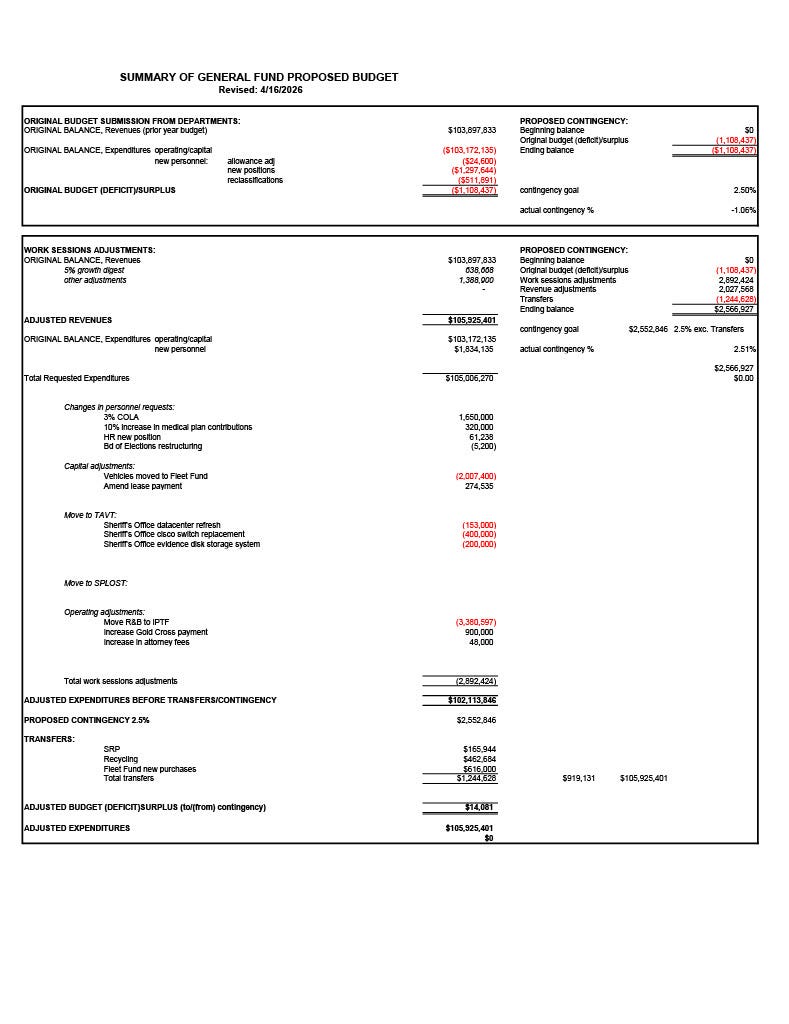
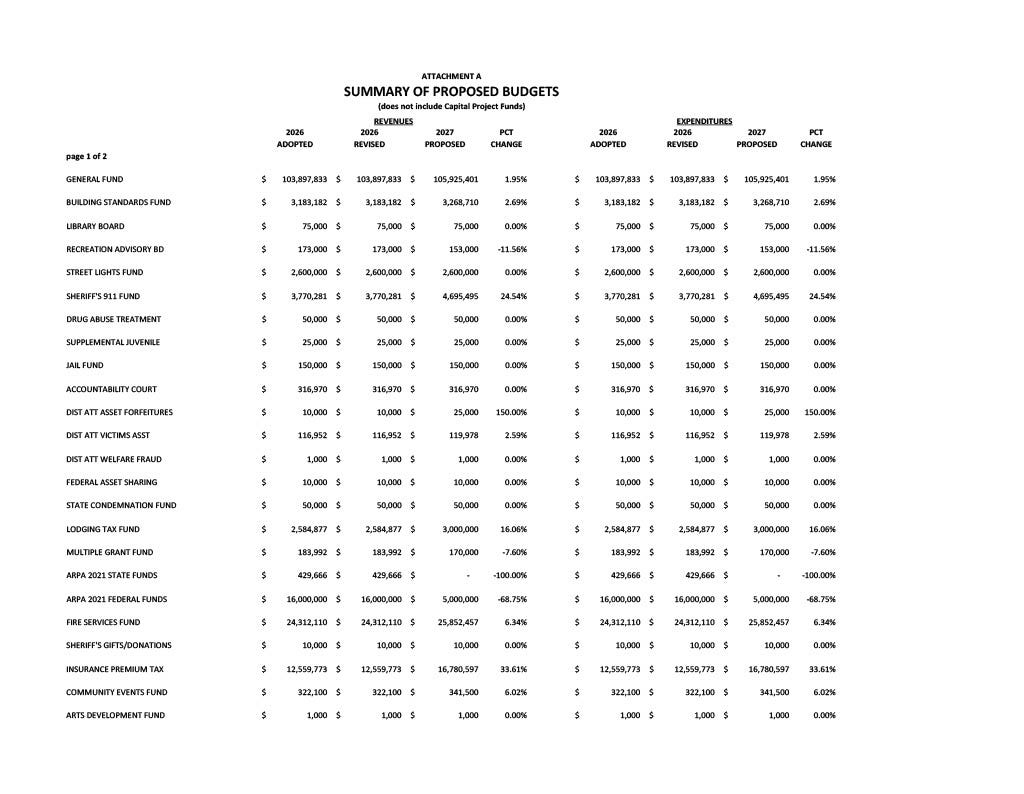
Johnson started, noting the budget is balanced and ready to advertise, with a 1.95% overall increase in the General Fund, down from roughly 3% last year. He credited zero-based budgeting, saying departments build from scratch rather than from the prior year’s numbers.
Key items he walked through:
3% cost of living increase for employees
Increase in medical plan contributions (both county and employee shares go up)
Vehicles moved to the Fleet Fund for amortization rather than sitting as lump-sum budget items
$750,000 in Sheriff’s Office technology requests moved to one-time TAVT money rather than recurring budget
Roads and Bridges fully moved to the Insurance Premium Tax Fund (IPTF) — Johnson described it as a cleaner accounting move, not a funding change
Gold Cross contract increase, adding one additional ambulance
General Fund proposed at $105,925,401 with a 2.51% contingency (goal is 2.5%)
Couch asked about the millage rate; Johnson confirmed the budget is balanced with a millage rate reduction in mind. Formal rate-setting happens in July/August.
Melear asked for a FEMA update. Johnson said FEMA reimbursements will not affect the General Fund. County covered costs with project money and will reimburse those accounts as FEMA money comes in. Staff stated $69 million received against $87 million spent, with another $13 million expected soon, putting them at roughly 97% reimbursed with more still coming through September/October.
Couch asked about the $8.4 million returned by EDACC from the White Oak Industrial Park sale. Johnson confirmed it’s been set aside and the intent is to return it to taxpayers via HB 439, which is on the governor’s desk. He described the $8.4 million as “seed money.”
Carraway then made a point of stating explicitly that the commission is unified in its intent to use that money to reduce or eliminate homestead property taxes, and that they have said so publicly. Johnson added they intend to “continue to fight” until homestead property taxes in Columbia County are eliminated. Johnson clarified that if the governor signs HB 439, it still goes to voters in November, meaning any tax relief would happen in 2027, not this fall, directly pushing back on a common public expectation.
Steed offered general praise for the budget process, noting it was his first budget cycle with the county.
Tax Digest Projection
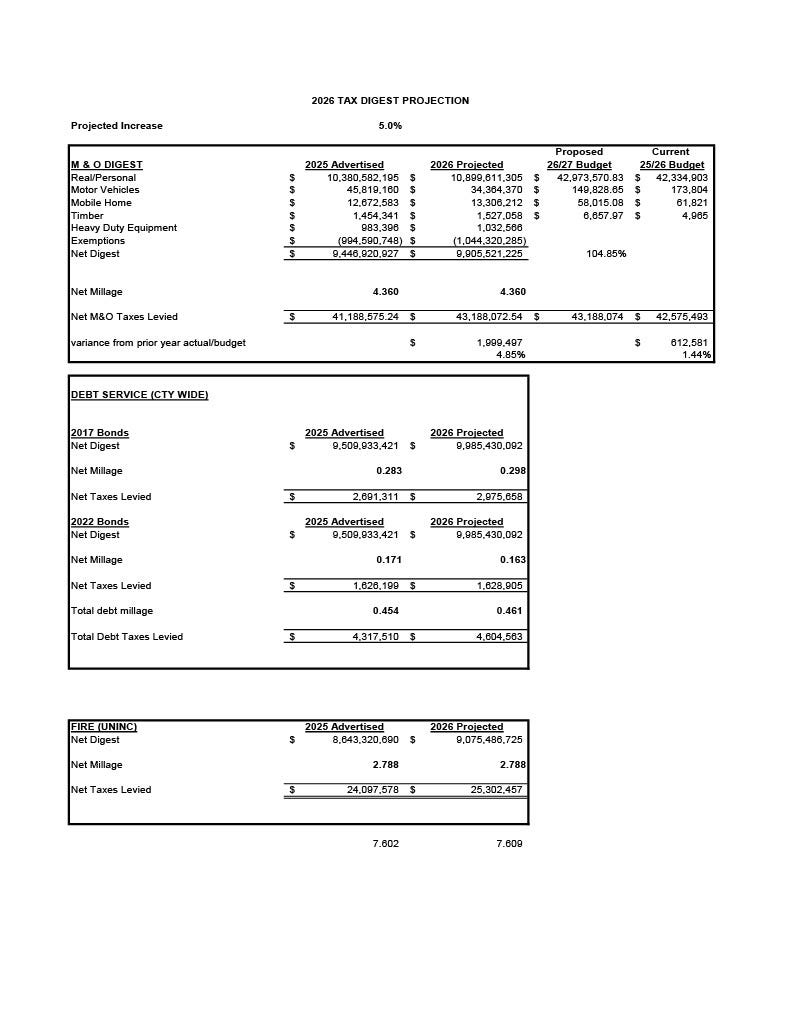
Johnson projected 5% growth in the digest for 2026, consistent with how the county typically estimates. He said last year’s millage rate reduction was so aggressive that despite digest growth, the county only netted an additional $612,581 in property tax revenue year over year.
He said property tax now represents about 40-42% of General Fund revenue, down from over 65% when he took over as county manager 15 years ago. 40% is roughly the floor he’s comfortable with, given the volatility of other revenue sources.
Melear pressed on that point, noting that sales tax is volatile (she cited the hurricane as an example of a sudden dropoff) and that property tax is the most dependable revenue stream. Johnson agreed 40% is about as low as he’d want to go, and flagged a specific risk: a bill discussed this legislative session would have eliminated the Insurance Premium Tax Fund, which would have forced everything currently funded there back into the General Fund, requiring a tax increase.
Johnson confirmed this will be the 10th millage rate reduction in the last 11 years, with 2020 (COVID) being the only exception.
Couch asked about the homestead portion of the ~$42 million in property tax revenue. Johnson said approximately $25 million of that $42 million comes from homestead properties. He noted that for a county with a $10 billion digest, $42 million total in property tax collections is among the lowest in the state.
Couch added that the board’s long-term intent is to eliminate homestead property tax entirely and replace it with other revenue streams.
Sales Tax Collections
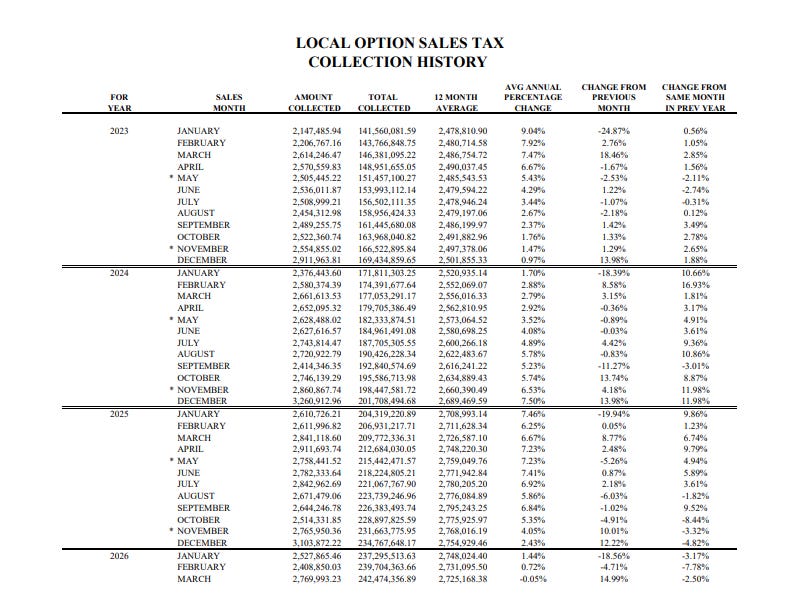
Johnson said the county conservatively estimates sales tax revenue. He noted that March 2026 showed the first negative year-over-year percentage change in several years (-0.05% on the 12-month average, per the document), describing it as possibly just a stabilization rather than a trend.
He explained how LOST works for the county: 100% of Local Option Sales Tax collections are applied as a credit against the millage rate, showing up on tax bills as a LOST credit that effectively lowers what property owners pay.
Summary of Proposed Budget
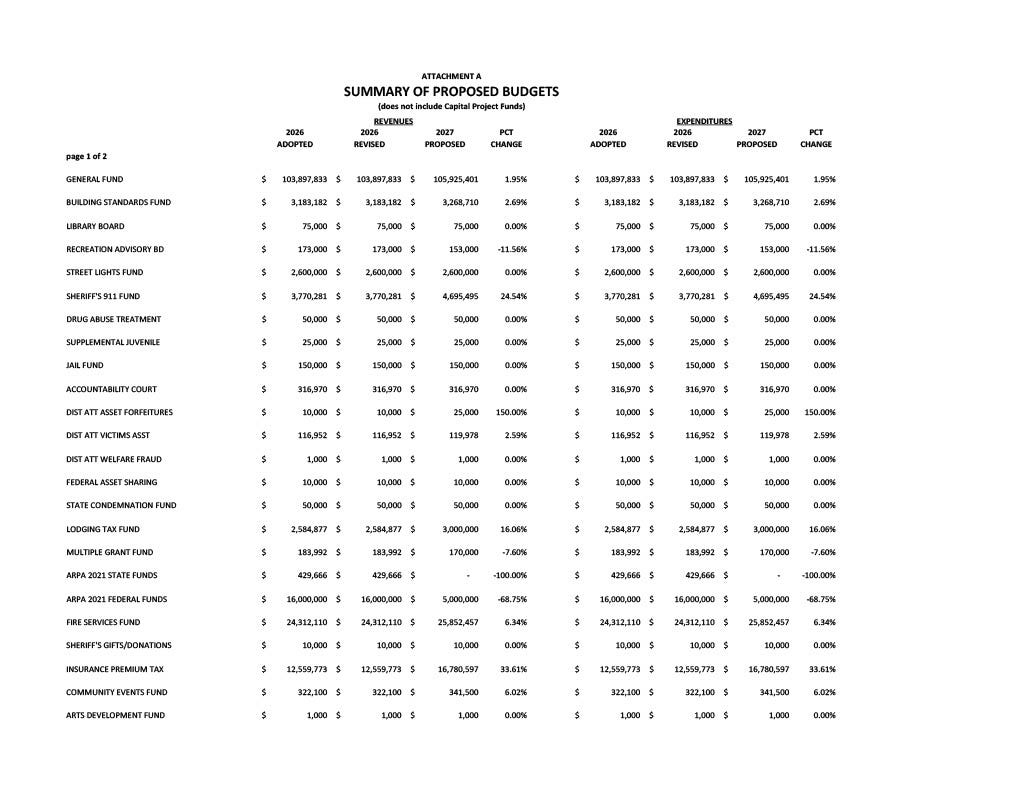
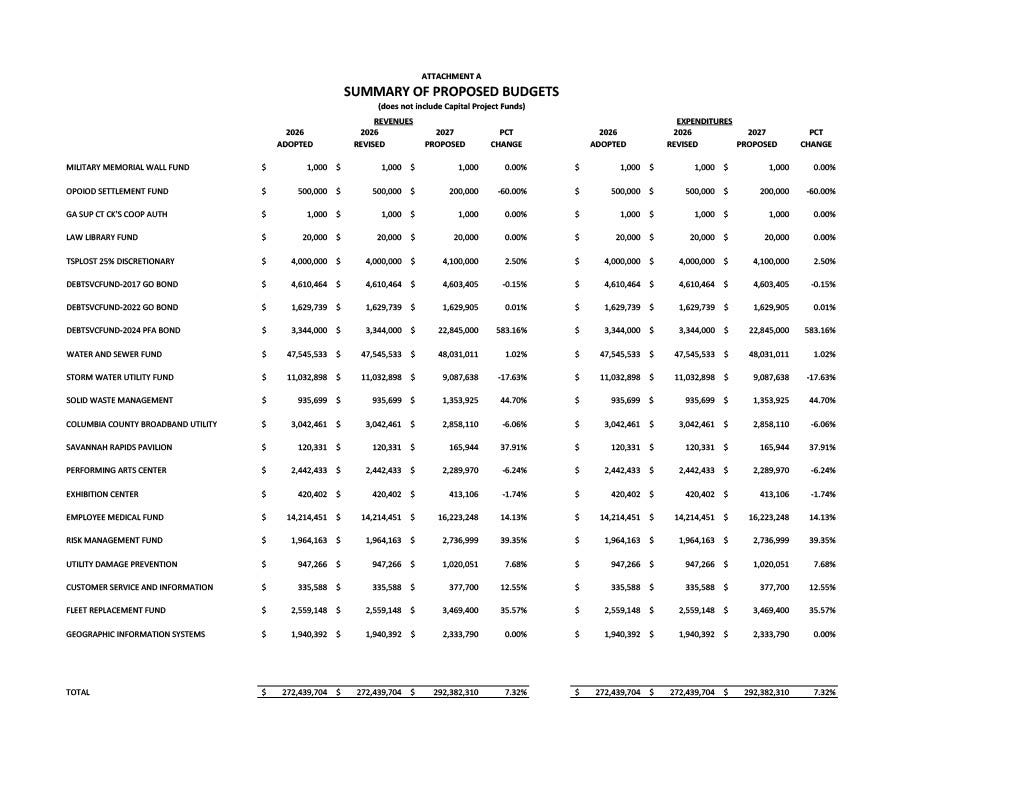
Johnson cautioned against reading the 7.32% overall budget increase as representative of county spending broadly. He pointed to the General Fund’s 1.95% as the more meaningful number, since many of the other funds are revenue-driven, they balance to whatever comes in, so they move up and down independently.
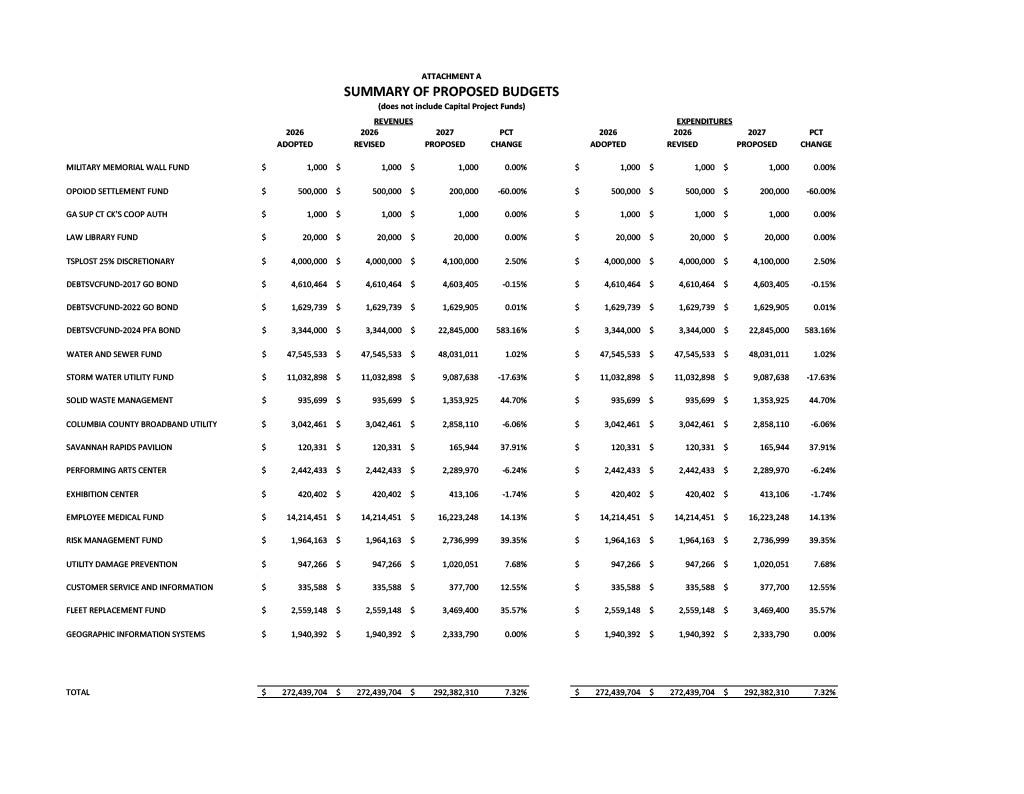
The specific outlier he called out: the 2024 PFA Bond debt service fund shows a 583% increase. He explained this was intentional. When the bonds were structured, the county took an interest-only period while investing the bond proceeds at high returns, deferring the larger payments. The big payment is now due, and he said they were prepared for it.
Johnson also noted the ARPA funds (both state and federal) dropping 68-100%, which reflects those one-time pandemic funds winding down.
Carraway reiterated the 1.95% General Fund figure for the record.
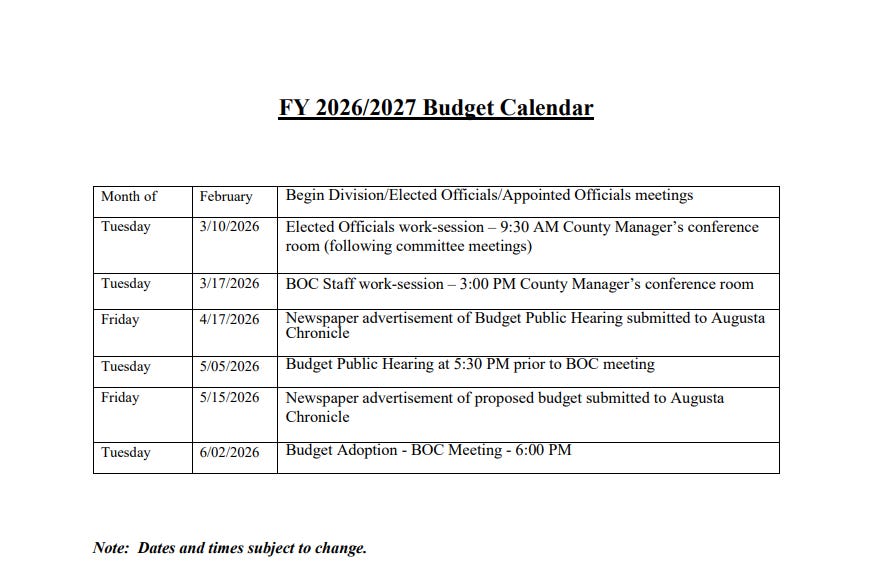
Budget Calendar
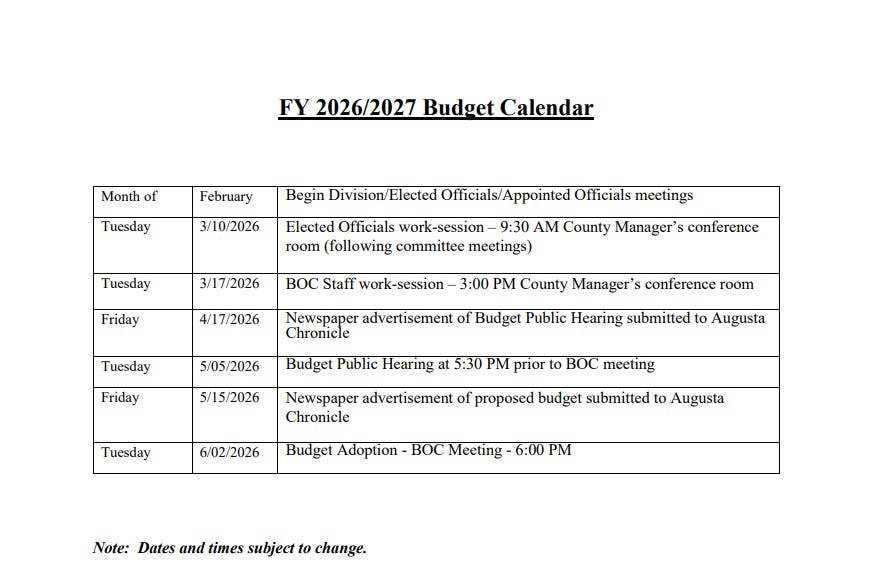
Johnson went through the remaining steps: newspaper advertisement of the proposed budget goes to press on May 15; budget adoption is set for the Board of Commissioners meeting on June 2. He noted that any significant changes resulting from public input will be disclosed at adoption. He credited finance staff (Ms. Reece) for managing thousands of pages of budget documents over a five-month process.
There were no public comments
Adjournment: 5:55pm